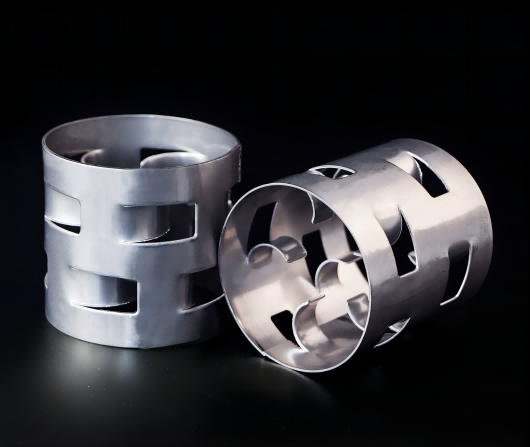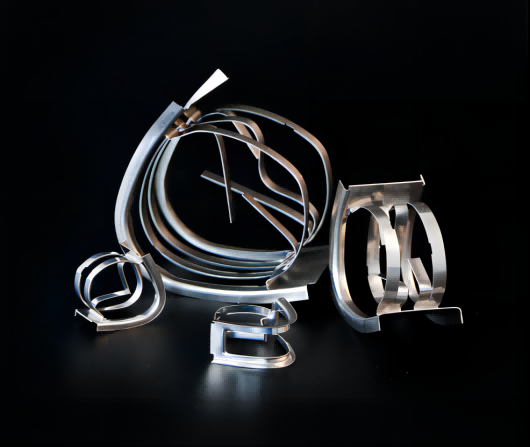

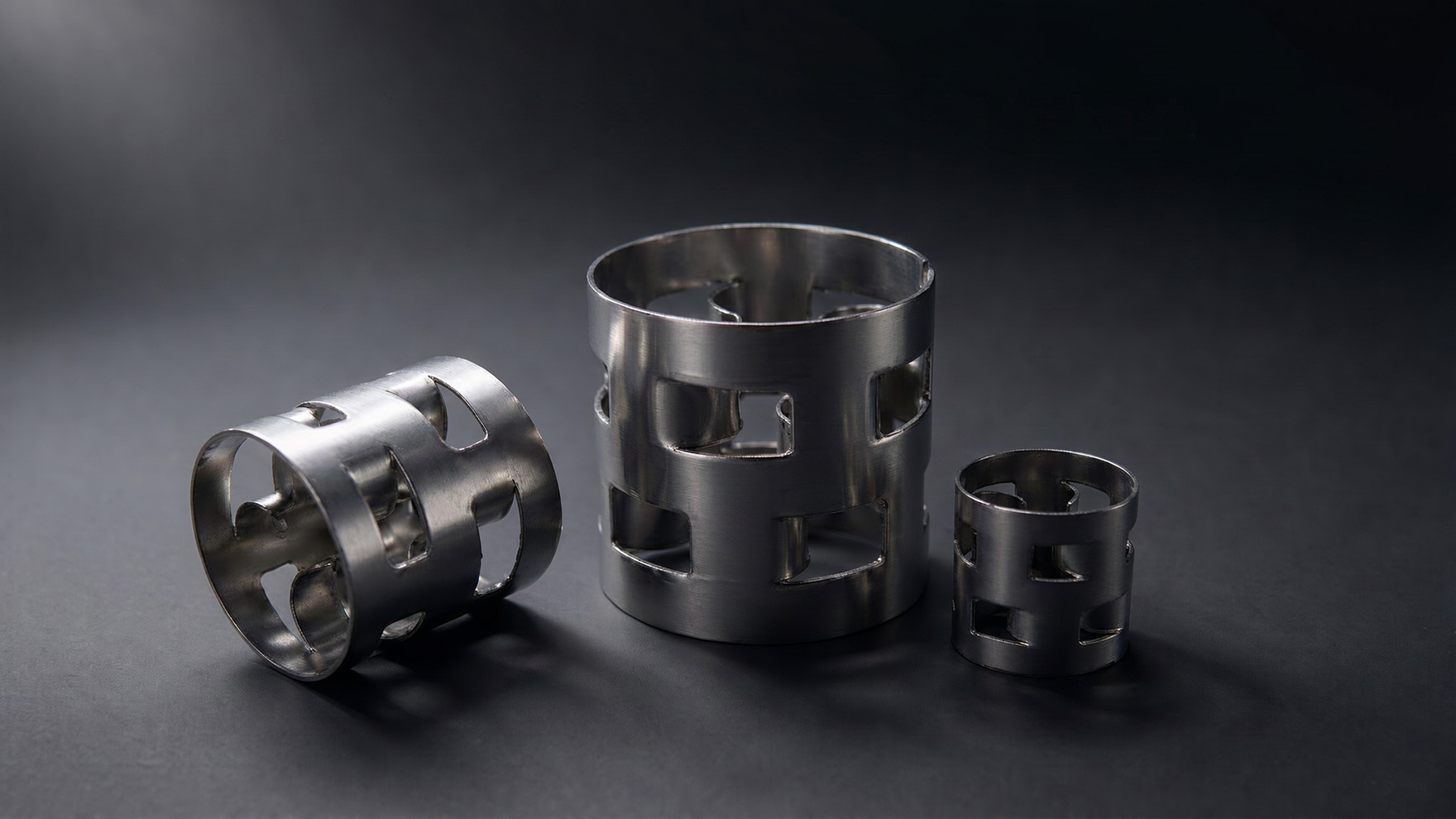
Figure 1: 304 (bright) and 316L (matte) stainless steel Pall rings — the two most specified grades for corrosive tower service.
Buyer's Brief: Metal Pall rings deliver the best balance of mass transfer efficiency, mechanical strength, and cost among all random packings. 304 grades suit general non-chloride service; 316L is the default for chloride-containing, acidic, or pharmaceutical applications. Below: full specifications, material selection logic, and pricing factors per cubic meter — so you can budget accurately before requesting a formal quote.
Metal Pall rings are the workhorse of random tower packing — evolved from the Raschig ring by punching two rows of windows in the cylindrical wall and bending the resulting tabs inward . This creates internal wetting surfaces and open gas pathways, eliminating the severe channeling and high pressure drop of plain cylinders.
Stamped from stainless steel strip (304 or 316L), they combine high mechanical strength (supporting deep beds up to 6 m without intermediate supports), temperature resistance to 450°C, and corrosion immunity in a wide range of aqueous and organic services . For a deeper technical dive, see our Stainless Steel Metal Pall Ring specification page.
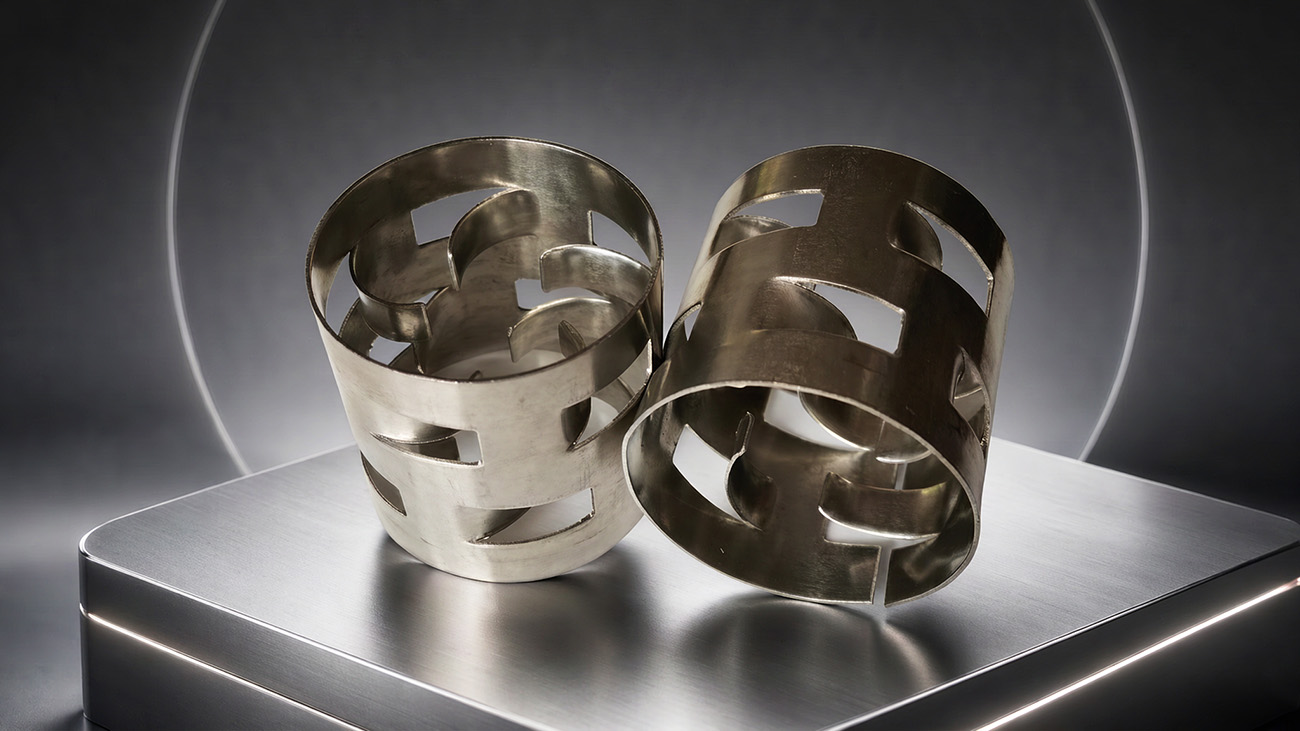
Figure 2: Punched windows and inward-bent fingers — the geometric features that give Pall rings 30–50% better mass transfer than Raschig rings.
All dimensions in mm. Data applies to both 304 and 316L grades (wall thickness may vary slightly by manufacturer):
| Size D×H×T (mm) | Surface Area (m²/m³) | Void Fraction (%) | Bulk Number (pcs/m³) | Bulk Density (kg/m³) | Typical ΔP (Pa/m) |
|---|---|---|---|---|---|
| 16 × 16 × 0.3 | 330–360 | 96.0–96.5 | 214,000 | 360–380 | 400–550 |
| 25 × 25 × 0.5 | 210–220 | 94.5–95.5 | 51,900 | 310–340 | 250–400 |
| 38 × 38 × 0.6 | 140–146 | 95.0–96.0 | 13,800 | 280–310 | 180–300 |
| 50 × 50 × 0.8 | 105–109 | 94.5–95.5 | 6,500 | 240–270 | 120–200 |
| 76 × 76 × 1.0 | 70–74 | 95.0–96.0 | 1,830 | 220–250 | 80–150 |
Data compiled from industry standard stainless steel Pall ring datasheets. Bulk density shown for 304 grade; 316L is ~2% heavier. Custom sizes (10/13/89/100mm) and wall thicknesses on request.
Choosing between 304 and 316L is the single biggest price driver. The difference isn't just material cost — it's service life, downtime risk, and corrosion failure prevention. See our 304 vs 316L Structured Packing guide for full corrosion threshold data.
| Factor | 304 Stainless Steel | 316L Stainless Steel |
|---|---|---|
| Cr / Ni / Mo | 18% Cr / 8% Ni / 0% Mo | 16% Cr / 10% Ni / 2–3% Mo |
| PREN (Pitting Index) | 18–20 | 24–26 |
| Chloride Resistance | ≤ 50 ppm (cold, neutral) | ≤ 200 ppm (cold), ≤ 100 ppm (hot) |
| Max Temperature | 450°C (continuous) | 450°C (continuous) |
| Relative Price (per m³) | Baseline ($1,200–1,800) | +15–25% premium ($2,500–4,000) |
| Best For | Fresh water, organics, non-chloride acids, solvents | Seawater, chlorinated solvents, HCl/Cl2 scrubbing, pharma |
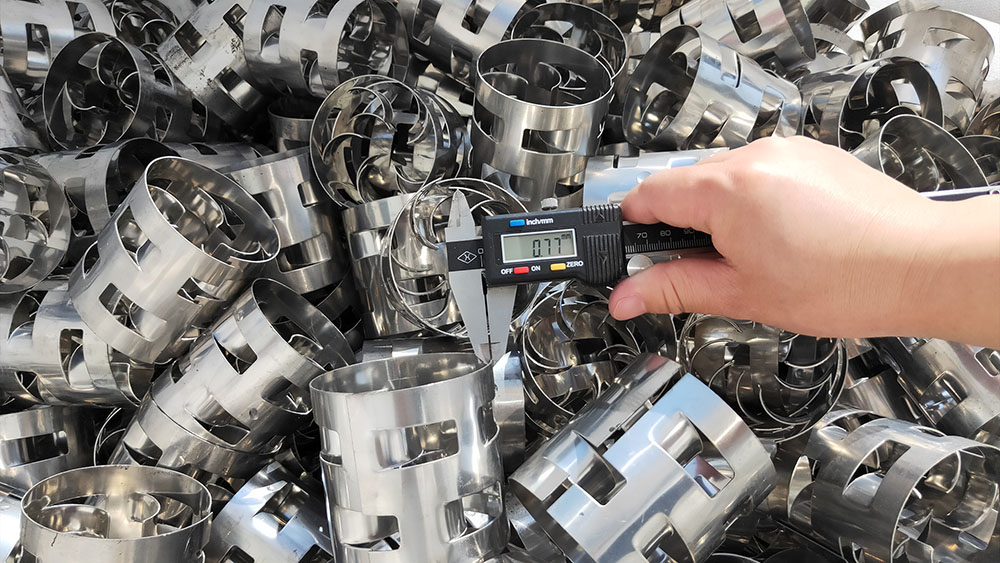
Figure 3: 304 (bright, left) vs 316L (matte, right) — visual difference is subtle; corrosion performance is not.
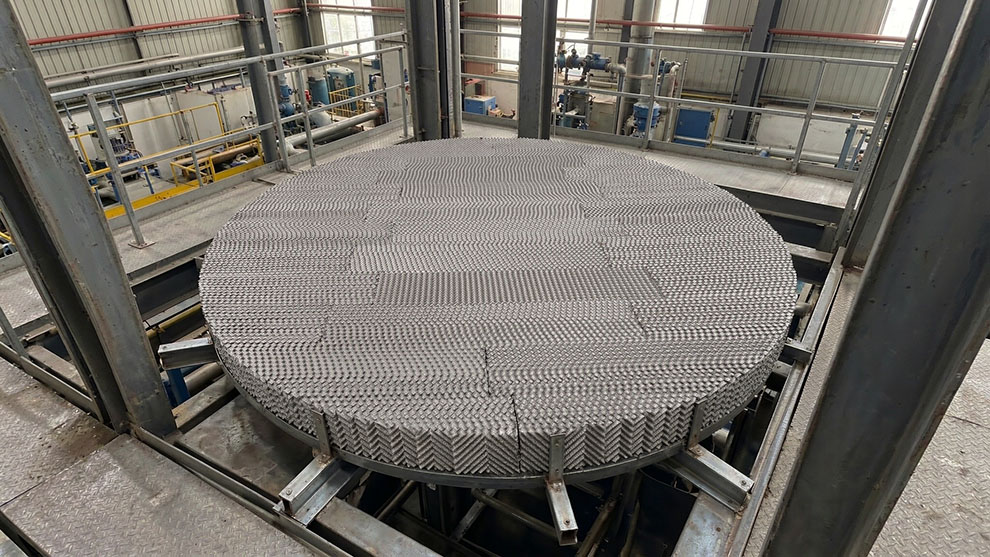
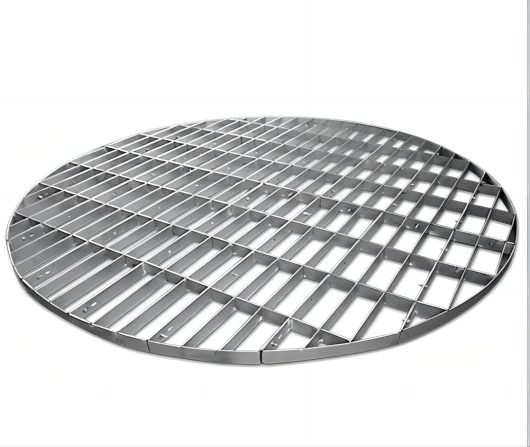
Figure 4: 38mm 304 Pall rings loaded into a 1.2m ID distillation column on a camel hump support grid.
Q: How much does 316L cost more than 304 for the same size?
A: Typically 15–25% premium, driven by molybdenum content (2–3%) and lower mill yield. For a 10 m³ order of 50mm rings, the difference is roughly $3,000–5,000 — often less than a single day of unplanned downtime from chloride stress cracking.
Q: Can I mix 304 and 316L in the same tower?
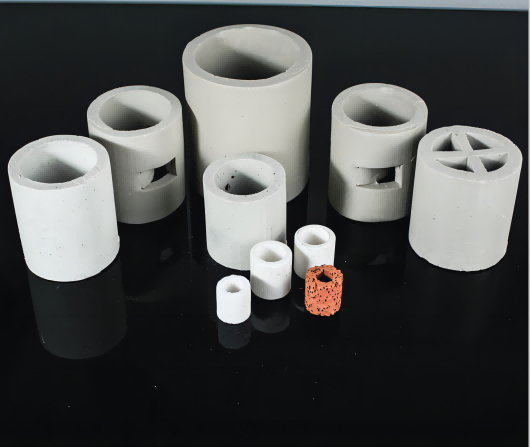
A: Not recommended. Galvanic coupling between grades in conductive aqueous service accelerates corrosion of the 304 sections. Use one grade throughout, or separate with a non-conductive barrier (e.g., ceramic ring layer).
Q: What's your MOQ and typical lead time?
A: MOQ is 1 m³ (mixed sizes accepted). Standard sizes (25/38/50mm in 304/316L) ship in 7–10 days. Custom sizes, special alloys, or passivation add 15–25 days. Contact us with your tower ID, bed height, and service conditions for a firm quote.
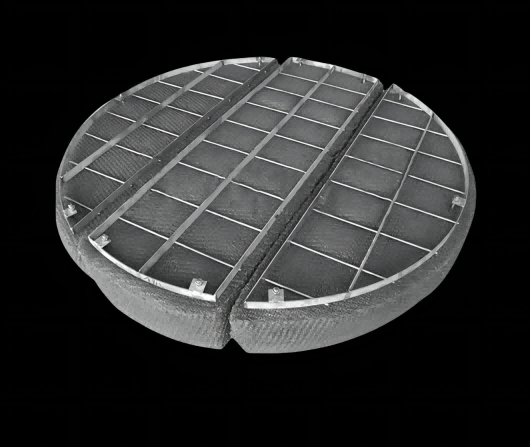
Send us your tower diameter, bed height, operating temperature, and process fluid composition (especially chloride concentration). We'll recommend 304 vs 316L, calculate exact m³ quantity, and issue a firm quote within 24 hours. FXSINO supplies stainless steel Pall rings in all standard sizes with MTC, dimensional reports, and matched support grids, liquid distributors, and bed limiters for complete tower packages.
Contact FXSINO: jackieqiu9202@gmail.com | +86 18507999558
 DIRECCIÓN
: Intersection of Jinguang Avenue and Chongqing Middle Road, Anyuan Industrial Park, Anyuan District, Pingxiang City, Jiangxi
DIRECCIÓN
: Intersection of Jinguang Avenue and Chongqing Middle Road, Anyuan Industrial Park, Anyuan District, Pingxiang City, Jiangxi Teléfono
: +86-18507999558
Teléfono
: +86-18507999558 Correo electrónico
: sales@fxsino.com
Correo electrónico
: sales@fxsino.com Whatsapp
:
+86-18507999558
Whatsapp
:
+86-18507999558 Red IPv6 compatible
Mapa del sitio
| XML | Blog
| política de privacidad
Red IPv6 compatible
Mapa del sitio
| XML | Blog
| política de privacidad