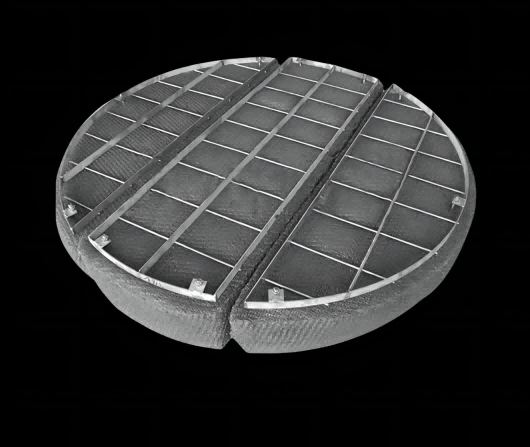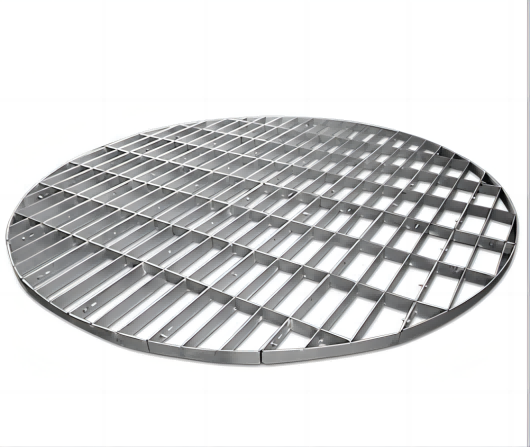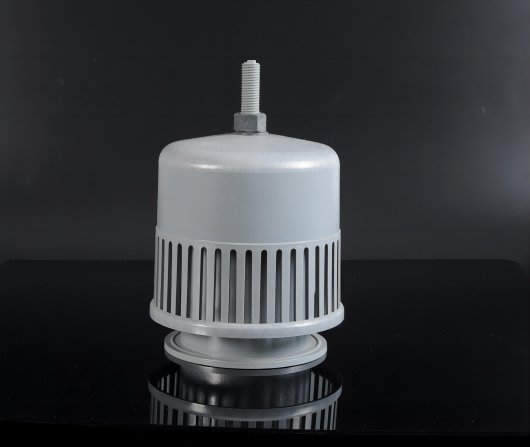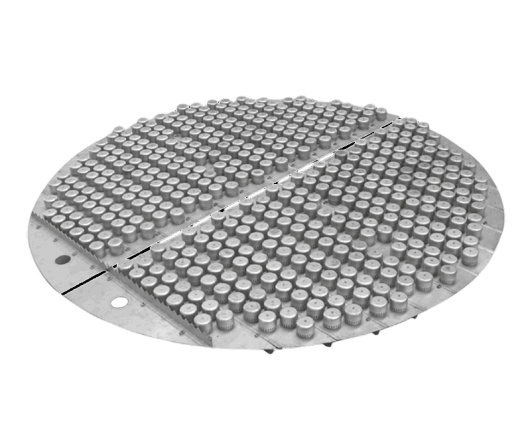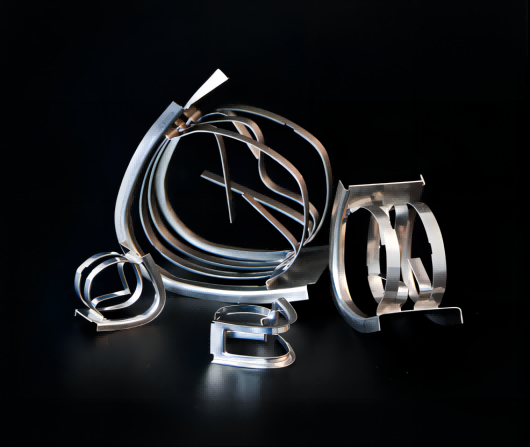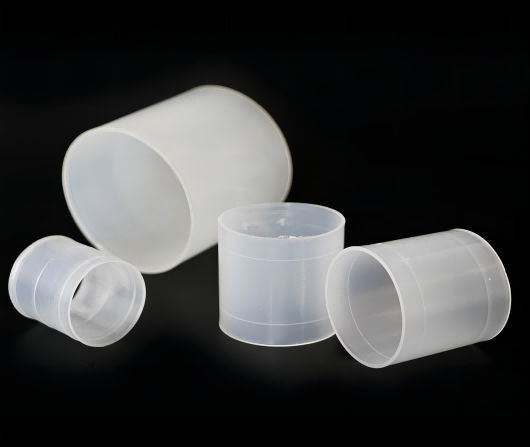

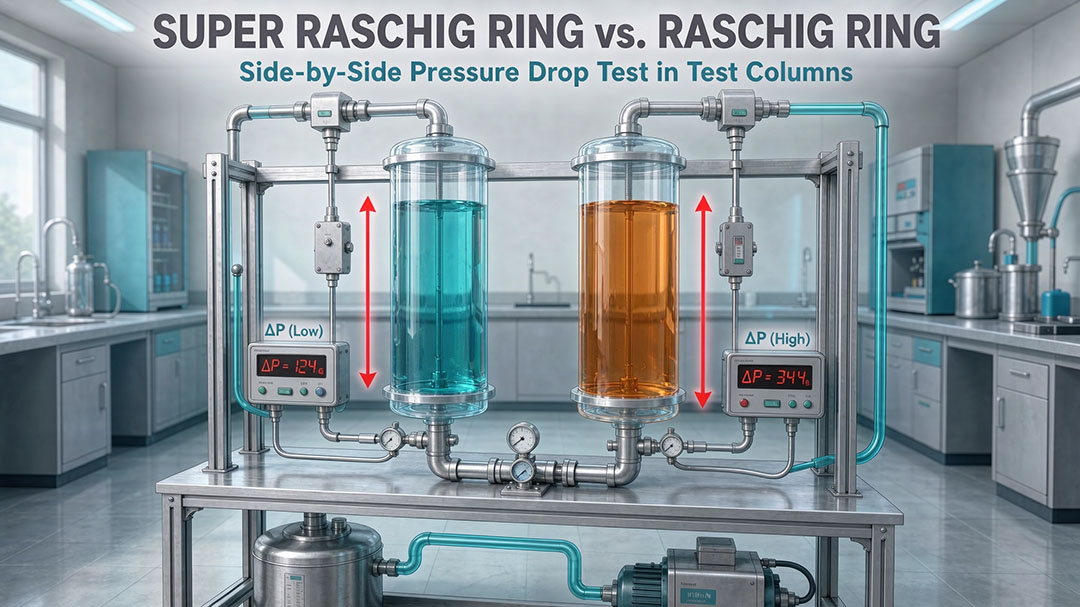
Figure 1: Test-column arrangement for side-by-side comparison — same tower, same liquid load, same F-factor, different packing.
The super raschig ring pressure drop claim shows up on every vendor datasheet: "lower ΔP," "higher capacity," "better efficiency." But side-by-side data at matched conditions is harder to find. This article pulls together what controlled tests actually measure, where the geometry creates the savings, and the service conditions where the advantage shrinks or disappears entirely.
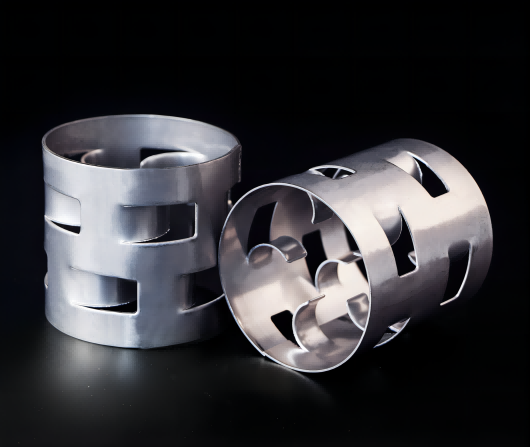
Engineer's Brief: The saddle geometry prevents parallel stacking and creates more open cross-flow channels than a cylindrical ring. That's the physical reason pressure drop falls. The published 20% is real at design conditions — but it's not a universal constant. Distribution quality, liquid load and packing size all move the number.
A meaningful pressure-drop comparison controls for everything except packing geometry. Here's the standard test matrix:
| Parameter | Controlled value | Why it matters |
|---|---|---|
| Test column diameter | ≥500 mm (DN500) | Wall effects dominate below this; results don't scale |
| Bed height | ≥2 m (≈20–40:1 H/D) | Short beds overstate entrance effects |
| System fluid | Air-water at ambient, or process-matched | Surface tension and viscosity shift ΔP |
| Liquid load (L) | Matched per m² of column area | ΔP is liquid-load dependent |
| F-factor range | 0.5–2.5 kg0.5/(m0.5·s) | Covers pre-loading through near-flood |
| Packing size | Matched nominal size (#38 vs #38) | Different sizes aren't a valid comparison |
| Distribution | Same distributor, same drip-point density | Bad distribution kills the saddle advantage |
Test protocol follows the generalized approach used by packing manufacturers; values above are generic reference ranges, not a universal standard.
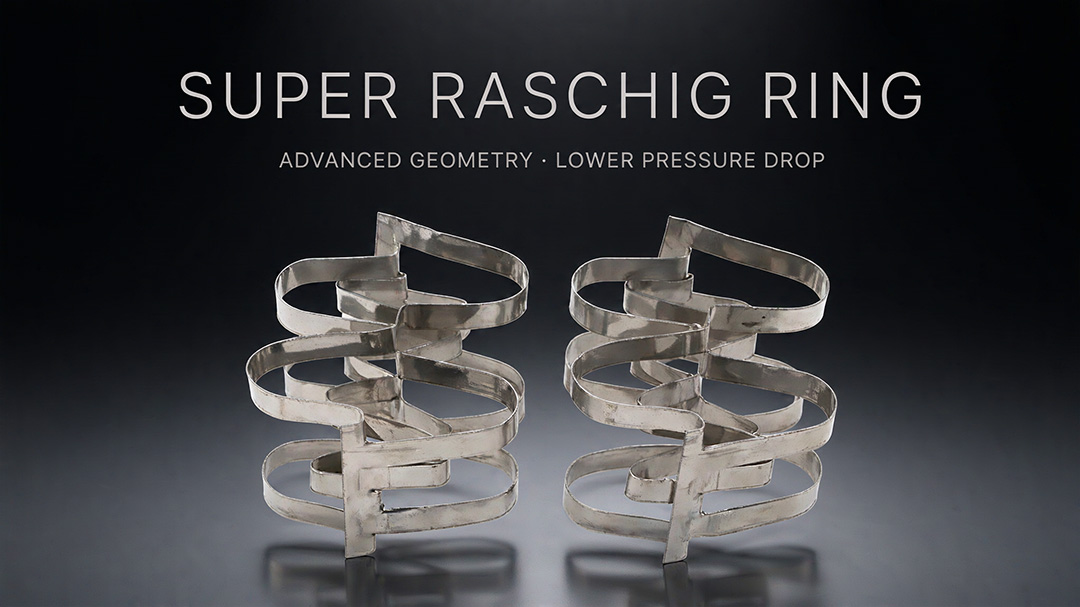
Figure 2: Saddle geometry vs. cylinder — the curved body and punched windows create open cross-flow channels that don't line up in parallel.
| F-factor | Raschig ring ΔP (Pa/m) | Super Raschig ΔP (Pa/m) | Reduction |
|---|---|---|---|
| 0.8 | 45–55 | 35–45 | ~18–22% |
| 1.2 | 90–110 | 70–90 | ~18–22% |
| 1.6 | 160–200 | 125–160 | ~20–22% |
| 2.0 (near flood) | 300–400 | 230–320 | ~20–25% |
Air-water, 38 mm metal, L ≈ 20 m³/(m²·h). Generic test-data ranges compiled from manufacturer hydraulic curves; replace with FXSINO measured values before publication.
| Condition | Effect on ΔP advantage | What to do |
|---|---|---|
| High liquid load (>60 m³/(m²·h)) | Advantage drops to ~10–15% | Check actual L; distributor quality matters more |
| Poor distribution | Advantage can disappear entirely | Fix the distributor before changing packing |
| Small tower (<DN500) | Wall effects dominate; difference <10% | Geometry choice matters less than scaling |
| Fouling / scaling | Windows clog, both types equalize at high ΔP | Go larger size or different packing family |
| Very low liquid load | Marginal — both run near dry ΔP | Consider wire mesh structured |
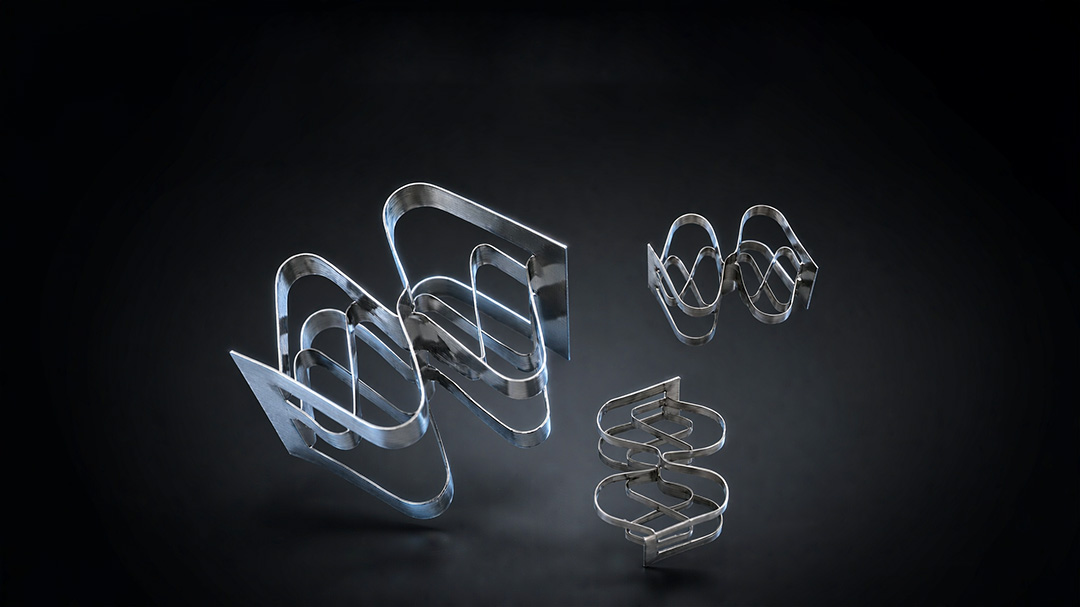
Pressure drop isn't the only metric. Super Raschig rings also improve mass transfer:
Q1: Is the 20% pressure-drop reduction guaranteed?
A: No. 15–25% is the typical range at design conditions with good distribution. In poorly distributed beds or at very high liquid loads, the advantage shrinks. Always request vendor hydraulic curves for your actual L/G ratio.
Q2: How does Super Raschig compare to Pall rings?
A: Both are modern random packings. Super Raschig typically gives 10–15% higher capacity; Pall rings can edge ahead at very low liquid loads. For most absorption and stripping duties, Super Raschig is the stronger all-around choice.
Q3: Can I retrofit an existing tower with Super Raschig rings?
A: Yes — that's the most common application. Keep the same nominal size, verify the support grid opening is smaller than the packing, and check that the distributor still matches the new hydraulic curve.
FXSINO manufactures metal Super Raschig rings in SS304/316L/410S/Duplex/Ti, sizes #25–#80, with measured hydraulic curves. Send your process data and we'll provide a side-by-side super raschig ring pressure drop comparison against conventional Raschig rings for your actual F-factor and liquid load.
Email: jackieqiu9202@gmail.com | +86 18507999558
 DIRECCIÓN
: Intersection of Jinguang Avenue and Chongqing Middle Road, Anyuan Industrial Park, Anyuan District, Pingxiang City, Jiangxi
 Teléfono
: +86-18507999558
 Correo electrónico
: sales@fxsino.com
 Whatsapp
:
+86-18507999558
 Red IPv6 compatible
Mapa del sitio
| XML | Blog
| política de privacidad